

On this page
What Does MCP for Agencies Actually Require?
Key Takeaway: MCP for agencies is an operational problem, not a capability one. Any server can query an ad account. Far fewer can hold forty client accounts separately, switch between them without leakage, log which client each change touched, and let you cleanly revoke access when a contract ends.
Most MCP servers were designed for someone connecting their own accounts. That is a reasonable default and it covers most users. It also means the agency requirements — separation, switching, attribution, offboarding — arrive as afterthoughts if they arrive at all.
Retrofitting them is painful, which is why it usually does not happen. This post covers what to insist on before you connect a single client account.
Where Does Separation Actually Break?

The failure everyone worries about — an AI reading Client A's data while answering a question about Client B — is real but not the most likely one. Three subtler ones cause more trouble.
Ambiguous context. You ask "how did last week go?" while several accounts are connected. Which account does the model pick? If the server exposes all accounts in one flat tool surface, the model guesses, and it will sometimes guess wrong or silently blend. This is the common failure and it produces answers that look fine.
Cross-client aggregation. "Compare CPA across my clients" is a question an agency genuinely wants answered — and one that some contracts explicitly forbid. Whether your server can do it is a capability question; whether you are allowed to is a contractual one, and they are not the same.
Residual access. A contract ends. Someone revokes the platform-level access but the MCP connection is left configured, or vice versa. Six months later nobody remembers which side is still live. This is the one that actually turns up in security reviews.
Key Takeaway: The realistic risk is not dramatic data leakage. It is a model quietly answering about the wrong client because the question did not specify one and the server did not force it to. Ask any vendor what happens when the account is ambiguous — "it picks the most likely" is the wrong answer.
The Four Things That Actually Matter

Requirement | What good looks like | What to avoid |
|---|---|---|
Separate | Each client is its own scope; queries cannot span without explicit intent | One flat pool of accounts the model chooses from |
Switch | Naming the client changes context cleanly and visibly | Reconnecting or editing config to move between clients |
Log | Every change records client, actor, action and timestamp | Changes attributed to a shared service account |
Offboard | One action removes a client's access entirely, verifiably | Manual cleanup across several places |
Of these, Log is the one agencies underestimate and later need most. When a client asks why their budget changed on the 14th, "an AI did it" is not an answer. You need client, actor, action, timestamp — and you need it without asking a vendor to run a query for you.
Why the Audit Trail Matters More for You
An in-house team with an AI changing bids has an internal problem if something goes wrong. An agency has a client problem, which is a different order of consequence.
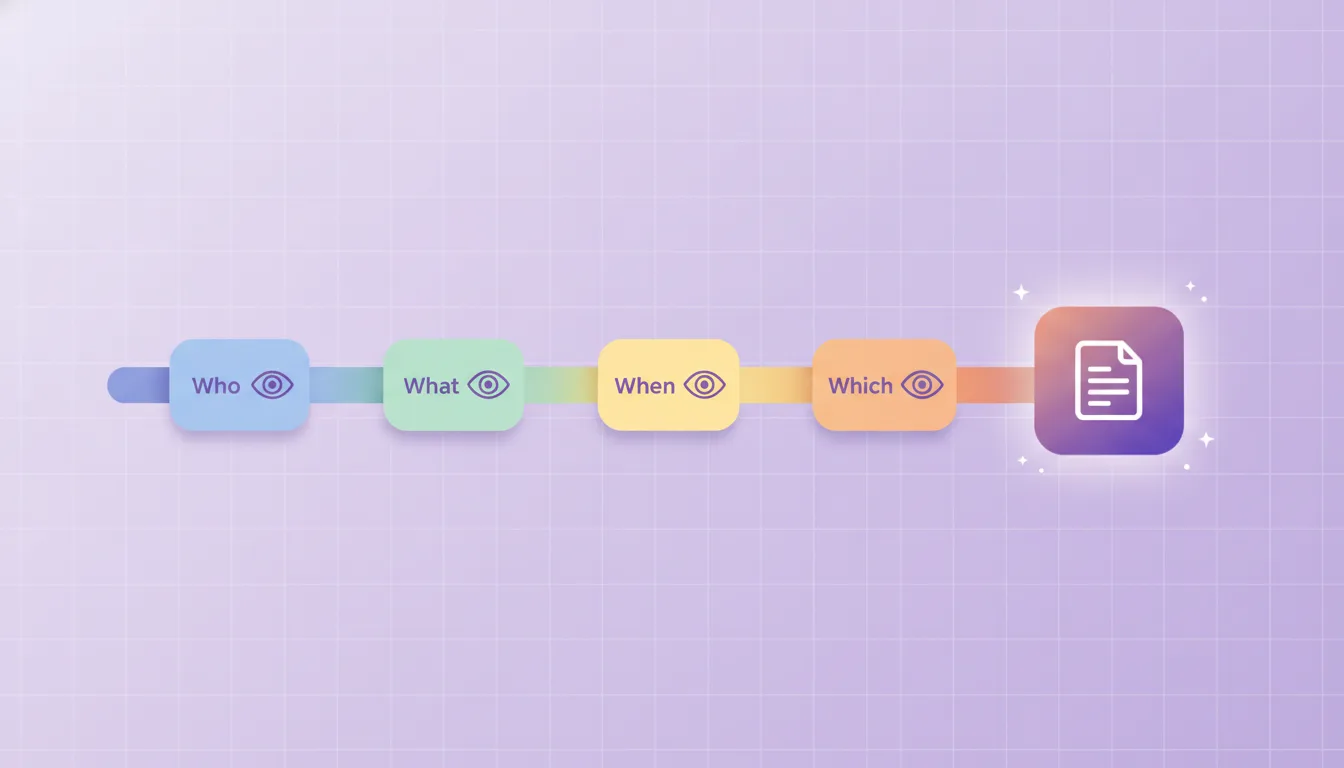
Platform-side change history helps but is not sufficient. It shows the change; it does not reliably show whether a human or an automation initiated it, or which of your staff instructed the automation. If everything routes through one connected application, the platform log attributes it all to that application.
So the server needs its own log, and it needs the client dimension in it. Ask to see a sample export before you commit — vendors who have built this will show you immediately, and vendors who have not will describe it in the future tense.
Honest limitation: Multi-client capability adds real overhead. More scopes to configure, more places for a misconfiguration to hide, and a single vendor sitting between you and every client's ad account — which concentrates dependency in a way some client security reviews will not accept. For a small agency running three clients, a simpler setup with manual separation may genuinely be safer. The operational machinery only pays for itself at scale.
What About White-Labelling?
Worth separating two things that get conflated.
White-labelled reporting — your branding on outputs the client sees — is a reporting-layer feature and largely orthogonal to MCP. If a client sees a report, the report should look like yours; that is true whether or not an AI produced it.
White-labelled access — the client not knowing which tools you use — is different, and worth thinking about carefully. Ad platforms show connected applications in account settings. A client who looks will see the application name regardless of what your reports say. Building a client relationship on them not looking is fragile.
The more durable position is that you use good tooling and are straightforward about it. "We connect through official APIs with an audit trail" is a stronger pitch than obscurity, particularly with clients whose security teams review vendors.
Seven Questions Before You Connect a Client

What happens when I ask an ambiguous question? The right answer is that it asks which client. "It picks the most likely" is a data-handling incident waiting to happen.
Can a single query span two clients? Know whether it can, then decide whether your contracts allow it.
Show me an audit log entry. Client, actor, action, timestamp. Ask to see one rather than to be told one exists.
How does offboarding work? One action, verifiable, without a support ticket.
How are per-client credentials stored? Encrypted at rest, scoped per client, revocable independently.
What is the account limit? Some servers degrade badly past a few dozen connections. Ask what happens at your actual number.
Does write access apply per client or globally? You may want read-only on some clients and write on others. Granular control here is rarer than it should be.
Question one is the highest-signal. A vendor who has thought about agencies answers it immediately; a vendor who has not will reach for what the model "usually" does.
Read this next → Connect Your Whole Ad Stack to One AI
What changes when every platform sits behind one connection rather than eight — and the questions that only become answerable at that point.
What Should You Take from This?
Agency requirements are operational: separation, switching, logging and offboarding. Capability is the easy part.
The realistic failure is a model answering about the wrong client because the question was ambiguous — not dramatic data leakage.
Audit logging matters more for agencies than in-house teams, because the consequence is a client conversation rather than an internal one.
White-labelled access is fragile; clients can see connected applications in platform settings. Transparency is the stronger position.

Built for More Than One Account
Brandlio handles multi-account and multi-client work across every connected platform, with per-platform scopes and a record of what changed. See pricing or connect your first account.
Frequently Asked Questions
What does an agency need from an MCP server?
Four operational things beyond basic capability: strict separation so queries cannot accidentally span clients, clean switching between client contexts, an audit log recording which client each change touched and who instructed it, and one-action offboarding when a contract ends. Most servers were designed for single-account users and treat these as afterthoughts.
Can an AI accidentally mix up two clients' data?
It can, and this is the realistic risk rather than dramatic leakage. If you ask an ambiguous question while several accounts are connected and the server exposes them in one flat pool, the model picks one — sometimes wrongly, sometimes blending. Ask any vendor what happens with an ambiguous question; the right answer is that it asks you to specify.
Should I be able to compare metrics across clients?
Technically many servers allow it, but whether you should is contractual rather than technical. Some client agreements explicitly prohibit their data being used in cross-client analysis. Check your contracts before treating it as a feature, because capability and permission are separate questions.
Why does audit logging matter more for agencies?
Because the consequence is external. When a client asks why their budget changed on a particular day, you need client, actor, action and timestamp. Platform-side change history typically attributes everything routed through one connected application to that application, so the server needs its own log with a client dimension.
Can I white-label an MCP connection?
Reporting can carry your branding, but access cannot really be hidden — ad platforms list connected applications in account settings, so a client who looks will see the tool name. The more durable position is transparency: connecting through official APIs with an audit trail is a stronger pitch than obscurity, especially with clients who run vendor reviews.
How many accounts can an MCP server handle?
It varies and vendors rarely publish limits. Some degrade past a few dozen connections, either in switching reliability or in how well the model handles a large tool surface. Ask what happens at your actual account count rather than the theoretical maximum.
How should offboarding work?
One action should remove a client's access entirely and verifiably, without a support ticket. The failure mode to avoid is partial cleanup — platform access revoked but the MCP connection left configured, or the reverse — which leaves residual access nobody remembers six months later.
Is a multi-client setup worth it for a small agency?
Not always. Multi-client machinery adds configuration surface and concentrates dependency on one vendor across every client account, which some security reviews will reject. With three clients, simpler separation handled manually may be safer. The overhead pays for itself at scale, not at the start.